The short answer: Healthy, comfortable ears don’t need to be cleaned on a fixed schedule. Check them regularly and clean only when you see ordinary dirt or wax, after they get wet if your veterinarian recommends it, or according to a plan made for your dog. If an ear is red, painful, swollen, smelly, very itchy, or producing unusual discharge, skip the home cleaning and call your veterinarian. Cornell’s ear-cleaning guide
It’s easy to assume that cleaner is always better. With dog ears, that isn’t true. Some dogs need routine maintenance every week or two. Others can go much longer because their ears stay clean on their own. Cleaning healthy ears too often can cause irritation, while cleaning an inflamed or infected ear with the wrong product can make a painful problem worse.
The goal isn’t to follow a universal calendar. It’s to learn what normal looks like for your dog, notice changes early, and know which care is safe at home.
Check regularly, clean when there’s a reason
A quick look at your dog’s ears once a week is a useful habit. Lift the ear flap gently and look only at what you can see without inserting anything into the canal.
A comfortable, normal-looking ear generally has:
- No obvious redness or swelling
- Little to no visible debris
- No strong or foul odor
- No discharge or unusual moisture
- No pain or resistance when the ear flap is gently handled
- No repeated scratching or head shaking
If that describes your dog’s ears, leave them alone. Cornell University’s College of Veterinary Medicine notes that dogs with healthy, normal ears need routine cleaning only when dirt or debris is present. It also warns that overcleaning can irritate the ears. Cornell’s ear-cleaning guide
Checking and cleaning aren’t the same thing. Check regularly. Clean when there’s a reason.
How often should your dog’s ears be cleaned?
The right frequency depends on your dog’s ears, health history, activity, and veterinary care plan.
An ear that suddenly needs frequent cleaning is giving you information. Instead of cleaning it more often indefinitely, ask why debris, moisture, or irritation keeps returning.
When should you call your veterinarian?
Ear inflammation can have several causes, including allergies, parasites, a foreign object, bacteria, yeast, or a problem deeper in the ear. Different causes can look surprisingly similar from the outside. A dark discharge, for example, doesn’t tell you on its own whether the cause is yeast, bacteria, mites, or a mixture.
Call your veterinarian if you notice:
- A strong or foul smell
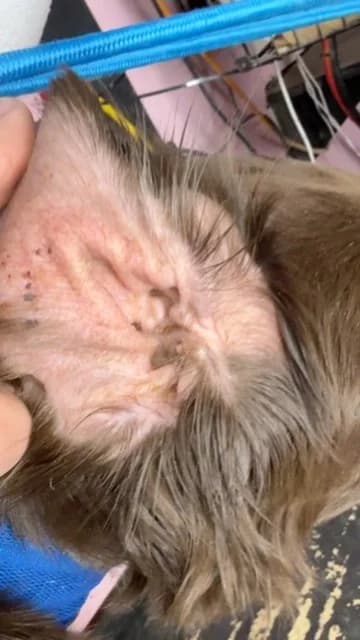
- Redness, swelling, heat, or moist-looking tissue
- Yellow, green, pus-like, bloody, or unusually dark discharge
- A sudden increase in wax or debris
- Frequent scratching, rubbing, or head shaking
- Pain, crying, growling, or pulling away when the ear is touched
- A soft or puffy swelling on the ear flap
- A problem that keeps returning after cleaning
- Ear trouble alongside itchy paws, face rubbing, or other skin symptoms
That last pattern matters. Allergic skin disease can affect both the ears and paws. If your dog is also chewing at their feet, the guide to repeated paw licking can help you document the full pattern for your veterinarian.
Seek prompt veterinary care if your dog develops a head tilt, loses balance, walks unsteadily, seems severely painful, or scratches hard enough to create open wounds. These signs can indicate a more serious problem than surface debris. Cornell’s itchy-ear guidance
A veterinarian can look down the canal with an otoscope and examine a sample of debris under a microscope. That matters because the safest cleaner and medication depend on what’s causing the inflammation and whether the eardrum is intact.
How to clean your dog’s ears safely
If your veterinarian has confirmed that routine home cleaning is appropriate, gather:
- A canine ear cleaner recommended for your dog
- Cotton balls or soft cotton pads
- A towel
- High-value treats
Choose a calm place with secure footing. If your dog is already worried by ear handling, work on comfort before adding liquid.
Check the ear first
Lift the ear flap and check for redness, swelling, discharge, odor, or pain. If anything looks abnormal, stop and call your veterinarian.
Follow the cleaner’s directions
Use the amount and method listed on the product or provided by your veterinarian. Avoid pressing the bottle tip into the ear opening or forcing liquid into the canal.
Massage gently at the base
With a light touch, massage where the ear meets the head. This helps the solution loosen ordinary debris. Stop if your dog shows pain.
Let your dog shake
Step back and let your dog shake their head. The towel earns its place here.
Wipe only what you can see
Use a cotton ball or pad to wipe the inside of the ear flap and the visible entrance to the canal. Don’t push material deeper or reach farther than your finger can comfortably go.
Keep the experience calm
Use small treats throughout the process. A short, calm cleaning is more useful than forcing your dog through a struggle that makes the next attempt harder.
If your dog cries, freezes, snaps, tries repeatedly to escape, or won’t allow the ear to be touched, stop. Pain and fear can look alike, and both deserve attention.
What shouldn’t you use in a dog’s ears?
Skip improvised solutions and aggressive tools. In particular, avoid:
- Cotton swabs: They can push debris farther into the canal and may injure sensitive tissue.
- Hydrogen peroxide or rubbing alcohol: These can irritate the ear canal, especially if the tissue is already inflamed.
- Vinegar mixtures and other home remedies: Even ingredients that seem mild can worsen an inflamed ear.
- Human ear products: A product made for people isn’t automatically safe for a dog’s ear anatomy or condition.
- Unprescribed medicated drops: Antibiotic, antifungal, steroid, and mite treatments aren’t interchangeable.
- Plain water in the canal: Moisture that remains trapped can create a poor environment for an ear already prone to trouble.
Don’t routinely pluck hair from inside the ear canal unless a veterinarian has said it’s needed for your dog. Hair removal can cause irritation, and current veterinary guidance doesn’t support treating it as an automatic part of ear maintenance.
What about baths, swimming, and seasonal changes?
Water exposure changes the conversation, especially for dogs with heavy ear flaps or a history of ear problems. After a bath, pool session, or lake day, gently dry the ear flap and the area around the canal opening. Don’t stuff a towel or cotton deep into the ear.
Some dogs benefit from a veterinarian-approved drying or cleaning product after their ears get wet. Others don’t need it. Ask your veterinarian before making a post-swim flush part of the routine, particularly if your dog has had infections or a damaged eardrum.
Kansas City dogs may move between humid summer outings, muddy spring walks, and indoor winter heat. The season can change how often a dog swims, gets bathed, or experiences allergy symptoms, but the decision to clean should still be based on the ear in front of you, not the date on the calendar.
If odor tends to return soon after bathing, the ears are only one possible source. This guide to why a dog may still smell after a bath explains other skin, coat, and medical possibilities.
Help your dog feel comfortable with ear handling
Don’t wait for a dirty ear to introduce ear handling. When your dog’s ears are healthy and comfortable, practice in tiny steps:
- Touch the shoulder, give a treat, and stop.
- Briefly touch the outside of the ear, reward, and stop.
- Lift the ear flap for one second, reward, and stop.
- Build duration gradually over several short sessions.
- Introduce the cotton pad and cleaner as separate steps before attempting a full cleaning.
Watch for stiff posture, turning away, lip licking, pinned ears, whale eye, or attempts to leave. Those are signs to make the exercise easier. The goal is willing participation, not endurance.
For a fuller plan, read Helping an Anxious Dog Learn That Grooming Is Safe.
Where Healing with Dogs KC fits
Healthy ears can be part of a thoughtful maintenance routine. Healing with Dogs KC’s Ear Cleaning Protocol provides gentle routine cleaning support and observation notes that owners can share with their veterinarian when needed.
That support has a firm boundary. Grooming can remove ordinary surface debris, help keep a healthy ear routine comfortable, and flag visible changes. It can’t diagnose or treat an infection, allergy, parasite, foreign object, or painful ear condition. Healing with Dogs KC isn’t a veterinary provider.
If your dog’s ears look healthy and you want patient, one-on-one maintenance care in the Kansas City metro, start your dog’s intake. If the ears are painful, inflamed, smelly, or producing discharge, call your veterinarian first.
Frequently asked questions
Is brown wax in my dog’s ear normal?
A small amount of ordinary wax can occur in a healthy ear. A sudden increase, coffee-ground-like debris, strong odor, redness, itching, or discomfort needs veterinary attention. Color alone can’t identify the cause.
Can I use wipes to clean my dog’s ears?
Wipes can remove light debris from the visible ear flap and canal entrance, but they don’t clean deeper in the canal. Ask your veterinarian which product and method fit your dog, especially if wax builds up repeatedly.
Should I clean my dog’s ears after every bath?
Not automatically. Keep water out of the canal and dry the visible ear afterward. Dogs whose ears stay clean may not need cleaner after every bath. Dogs prone to infections may need a veterinarian-directed post-bath routine.
Can a groomer clean an infected ear?
An infected, painful, inflamed, or unusually dirty ear should be evaluated by a veterinarian. Once the medical problem is diagnosed and the ear is comfortable, a groomer can support routine maintenance within the veterinarian’s plan.
Why do my dog’s ear problems keep coming back?
Recurring ear trouble often means an underlying factor hasn’t been fully addressed. Allergies, anatomy, retained moisture, parasites, foreign material, and deeper ear disease are among the possibilities. A veterinary exam and testing are more useful than switching cleaners repeatedly.
Sources
- Cornell University College of Veterinary Medicine: How to Clean Your Dog’s Ears
- Cornell University College of Veterinary Medicine: Itchy Ear Problems
- Merck Veterinary Manual: Ear Infections and Otitis Externa in Dogs
This article provides general education about routine ear care. It’s not a diagnosis or a substitute for veterinary care.