The short answer: Dog dandruff is dead skin shedding faster than it should, and it almost always traces back to one of eight causes: dry air, the wrong shampoo, over- or under-bathing, poor coat maintenance, nutrition gaps, parasites, allergies, or an underlying medical condition. The first four you can fix at home. The last four need your veterinarian. This guide shows you how to tell the difference.
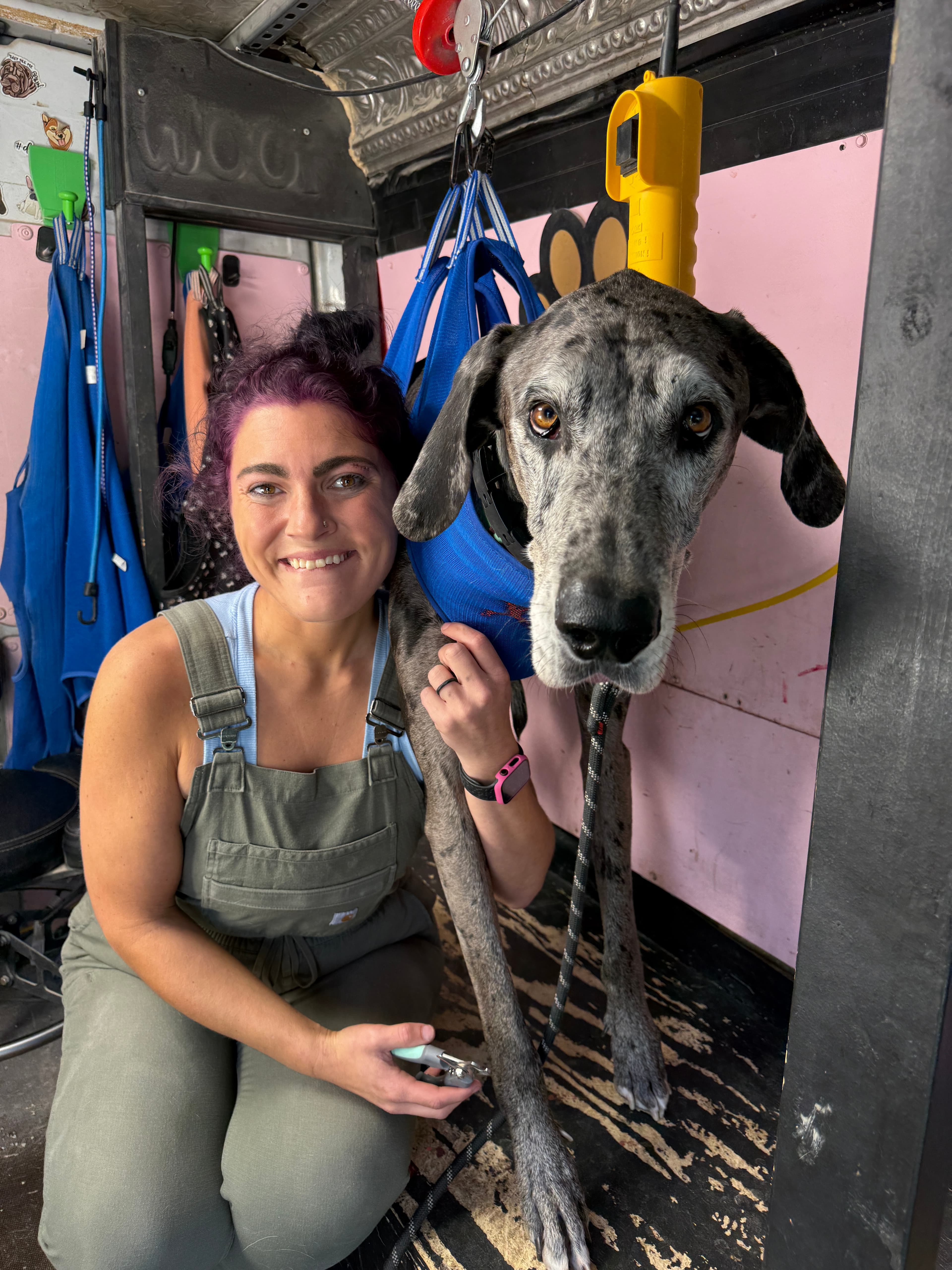
If you've been told "some dogs are just itchy," this guide is for you. I'm Jamie — I spent ten years in animal welfare before training in Iv San Bernard (ISB) restorative skin and coat protocols, and dry, flaky skin is the single most common thing I see in my mobile spa. It's also the most misunderstood.
One important thing before we start: I'm an ISB-trained pet professional, not a veterinarian. I don't diagnose or treat medical conditions, and neither should any groomer. What I can do is explain how dog skin works, what healthy maintenance looks like, and — just as importantly — when flaking stops being a grooming issue and becomes a medical one.
What dog dandruff actually is
Those white flakes are dead skin cells — and shedding them is completely normal. A dog's epidermis renews itself continuously, with cells traveling from the deepest layer to the surface in roughly three weeks. In healthy skin, old cells shed in particles too small to notice.
Visible dandruff means that process has gone off-rhythm. Either the skin is producing and shedding cells too quickly, or the shed cells are clumping together — usually because the skin's oil (sebum) balance is disrupted. Sebum is the skin's built-in conditioner: it keeps the outer layer flexible, holds moisture in, and supports the acid mantle, a thin protective film that defends against bacteria and irritants.
Here's the number that explains so many skin problems I see: dog skin sits at a pH of roughly 6.2 to 7.4 — close to neutral — while human skin is distinctly acidic at around 5.5. (Exact values vary by breed and even body location.) That gap is why products made for human skin so reliably disrupt a dog's skin barrier.
One more structural difference worth knowing: a dog's epidermis is thinner than ours, and much of its environmental protection is outsourced to the coat. That's why coat condition and skin condition are inseparable — a broken, sparse, or matted coat leaves thin skin doing a job it wasn't built for.
Dry flakes vs. greasy flakes — they mean different things
Before you change anything, look closely at the flakes and feel the coat:
| Dry flaking (seborrhea sicca) | Oily flaking (seborrhea oleosa) | |
|---|---|---|
| Flakes look | Small, white, powdery — like light snow in the coat | Larger, yellowish, waxy — stick to hair shafts |
| Coat feels | Dry, dull, sometimes brittle | Greasy, heavy, sometimes odorous |
| Commonly traces to | Environment, bathing habits, low humidity, nutrition | More often medical: allergies, hormonal conditions, skin infections |
| First move | Audit home care (below) | Veterinary visit — greasy, smelly flaking deserves a diagnosis |
This distinction matters because the internet lumps both together as "dandruff" and prescribes the same oatmeal shampoo for everything. Greasy, odorous flaking is disproportionately likely to have a medical driver, and shampooing over it just delays the diagnosis.
The 8 most common causes of dry, flaky skin
1. Dry indoor air (the Kansas City winter special)
Midwest winters are brutal on dog skin. Forced-air heating can drop indoor humidity below 30%, and dry air pulls moisture straight out of the skin's outer layer. If your dog's flaking appears in November and improves in April, this is your prime suspect. It's also the most fixable: a humidifier in the room where your dog sleeps makes a measurable difference.
2. The wrong shampoo — including human shampoo
This is the cause hiding in plain sight. Because of the pH gap covered above, human shampoo — yes, including baby shampoo and anti-dandruff formulas — strips a dog's acid mantle and disrupts the skin barrier. Even among dog shampoos, cheap formulas with harsh sulfates and heavy fragrance can dry skin badly. If the flakes showed up after you changed products, you've likely found your answer. Ask me for the products I actually use and trust while that recommendation list is offline.
3. Over-bathing — or under-rinsing
Bathing too frequently with a stripping shampoo removes sebum faster than the skin replaces it. But here's the nuance most blogs miss: the problem is usually the product, not the frequency. With appropriate, skin-matched products, even frequent bathing can support skin health — it's how professional restorative protocols work. The other silent culprit is under-rinsing: shampoo residue left in a dense coat is one of the most common irritants I find. Full breakdown in How Often Should You Actually Bathe Your Dog?
4. Under-brushing and coat neglect
Brushing isn't cosmetic. It distributes sebum along each hair shaft, removes dead coat that traps flakes and moisture, and stimulates circulation. A dog who's rarely brushed accumulates dead undercoat that blocks airflow to the skin — a setup for flaking now and hot spots later.
5. Nutrition gaps — especially fatty acids
Skin is one of the first places nutrition shows. Diets low in omega-3 and omega-6 fatty acids are associated with dry, dull coats and flaky skin. This one is a conversation for your veterinarian: they can evaluate the diet and recommend whether a fatty-acid supplement makes sense for your specific dog, at what dose. Don't free-pour fish oil based on an internet chart.
6. Parasites — including "walking dandruff"
Some flakes aren't flakes. Cheyletiella mites are literally nicknamed "walking dandruff" because the white specks move. Flea infestations also drive flaking through scratching and irritation, especially in flea-allergic dogs. If dandruff arrived suddenly, itches intensely, or seems concentrated along the back, get your dog to the vet — parasites are very treatable, but only there.
7. Allergies
Environmental allergies (atopy), food allergies, and contact allergies all inflame skin, and chronically inflamed skin flakes. Allergy clues: the itching is the headline and the flaking is the footnote; paws, ears, belly, and armpits are the hot zones; the pattern is seasonal or tied to specific exposures. Allergy workups belong entirely to your veterinarian — but well-documented grooming notes (which I provide at every visit) genuinely help them see patterns.
8. Underlying medical conditions
Hypothyroidism, Cushing's disease, skin infections, and immune-mediated conditions can all present with coat and skin changes — sometimes flaking is the first visible sign. This is why "some dogs are just itchy" is such a harmful shrug. Persistent flaking that resists good care isn't a personality trait. It's information.
Why this list is ordered this way: Causes 1–4 are husbandry — you can address them at home, this week, at low cost and zero risk. Causes 5–8 are medical territory. Working through the home factors first, while watching for the red flags below, is both the cheapest path and the most useful information you can bring your vet if flaking persists.
What you can safely do at home this week
- Audit the shampoo bottle. If it isn't formulated for dogs, retire it today. If it is, check for heavy fragrance and harsh sulfates. When in doubt, a gentle, moisturizing dog formula beats a "medicated" one you chose by guesswork.
- Fix your bath mechanics. Lukewarm water — comfortable on your inner wrist, never hot, because hot water strips oils and inflames itchy skin. Dilute shampoo before applying. Then rinse until you're certain, and rinse two more minutes. Residue is the enemy.
- Dry thoroughly. Damp undercoat against skin breeds irritation. Towel-blot (don't scrub), and if you use a dryer, keep it on cool or low warm, moving constantly.
- Brush on a schedule. A few minutes daily for double and long coats, 2–3 times weekly for short coats. You're distributing oils and lifting dead coat — think of it as skin care, not styling.
- Humidify in winter. A humidifier where your dog sleeps, aiming for 40–50% relative humidity, directly counters the Midwest winter effect.
- Track it. Take a clear photo of the worst area once a week under similar lighting. Skin changes are gradual; photos beat memory, and they're gold for your vet or groomer.
What NOT to do: Don't apply coconut oil, olive oil, or "moisturizing" home remedies to the coat — they trap debris, clog follicles, and invite licking. Don't use human anti-dandruff shampoo (wrong pH, wrong actives). And don't buy a medicated dog shampoo to self-treat a suspected infection — medicated formulas are for diagnosed conditions, chosen with your vet.
Red flags: when flaking is a vet visit, not a bath
Call your veterinarian promptly if flaking comes with any of the following:
- Hair loss, bald patches, or coat thinning
- Sores, scabs, pustules, or raw spots
- Greasy coat with a distinct odor
- Skin that looks thickened, darkened, or "elephant-like"
- Intense scratching, chewing, or paw-licking that interrupts sleep or play
- Flakes that seem to move (possible Cheyletiella mites)
- Changes in appetite, thirst, weight, or energy alongside skin changes
- No improvement after 3–4 weeks of consistent, correct home care
None of these mean disaster — most have very treatable explanations. They just mean the answer lives in a diagnosis, and no amount of bathing substitutes for one.
Where professional restorative care fits in
Between "home bath" and "veterinary dermatology" there's a middle layer most owners don't know exists: structured, professional skin and coat restoration. In my mobile spa, that looks like assessment first (documented with photos before anything touches your dog), ISB products matched to the skin in front of me rather than one house shampoo for every dog, technique that protects the skin barrier, documentation you can hand your vet, and a home plan — because the goal is a dog who needs me less often.
To be crystal clear about the boundary one more time: restorative grooming supports skin health and comfort. It does not diagnose or treat disease. The dogs who do best are the ones whose groomer and vet are working from the same notes.
Frequently asked questions
Why does my dog have dandruff all of a sudden? Sudden flaking usually follows an environmental change: winter heating season, a new shampoo, over-bathing, a diet change, or stress. If it arrives with intense itching, hair loss, or sores — or the "flakes" move — call your vet, because sudden-onset flaking can also signal parasites or a medical condition.
Can I use Head & Shoulders or baby shampoo on my dog? No. Dog skin is near-neutral (roughly pH 6.2–7.4) while human skin is acidic (about 5.5), so human formulas — however gentle for people — disrupt a dog's protective acid mantle and usually make flaking worse.
How long until I see improvement? Dog skin renews in roughly three weeks, so think in weeks, not days. Environment-driven flaking often improves within 2–4 weeks of correct care. If nothing changes after a month of doing the right things, that's a data point your vet should hear.
Is coconut oil good for dog dandruff? Skip it. Topical oils mask flakes temporarily while clogging follicles, trapping debris, and encouraging licking. Fix the cause instead — and ask your vet before adding any oil to the diet.
My dog is itchy but has no flakes. Same advice? Itch without flaking pushes harder toward allergies or parasites, which are vet territory sooner. The home-care mechanics above still apply and won't hurt — but persistent itch deserves a diagnosis, not just better baths.
Sources & further reading
- Merck Veterinary Manual — "Seborrhea in Dogs"
- Merck Veterinary Manual — "Dermatitis and Dermatologic Problems in Dogs"
- American Kennel Club — "Dry Skin on Dogs: Signs, Symptoms, Treatments"
- Iv San Bernard USA — professional skin and coat education
This article is educational and reflects professional grooming experience. It is not veterinary advice, and it is not a substitute for diagnosis or treatment by a licensed veterinarian. When in doubt, call your vet — I mean it.