The short answer: A double coat is a climate-control system, not a fur jacket. It insulates against heat as well as cold, blocks UV, and sheds its warm underlayer seasonally. Shaving it destroys the system — often permanently changing how the coat grows back — while making sunburn and overheating more likely, not less. The kind answer to a hot double-coated dog is a de-shed (bath, blow-out, undercoat removal), not a shave-down. The rare exceptions are medical, and they're your vet's call.
Every June, someone kind and well-meaning asks me to shave their Husky "so he's not so hot." I get it — you're sweating in a Kansas City July, your dog is wearing what looks like a parka, and empathy says take the parka off. This article is the long version of why I'll gently talk you out of it, and what we'll do instead that actually works.
What a double coat is (and which dogs have one)
Double-coated breeds grow two distinct layers:
- The undercoat: short, soft, dense, wooly hairs close to the skin. This is the insulating layer, and it's the part that "blows" (sheds massively) in spring and fall.
- The guard coat (topcoat): longer, coarser hairs that lie over the undercoat. Guard hairs repel water and dirt, block UV, and protect the skin.
You'll find this setup on Huskies, Malamutes, German Shepherds, Golden Retrievers, Labs, Aussies, Border Collies, Corgis, Great Pyrenees, Newfoundlands, Pomeranians, Samoyeds, Bernese Mountain Dogs, and most spitz and herding types. (Poodles, Doodles, Yorkies, and Shih Tzus are single-coated — different rules entirely, and yes, those coats can be clipped.)
How the system cools a dog in summer
This is the counterintuitive part. Dogs don't cool the way we do — they barely sweat through skin, so bare skin doesn't help them the way it helps us. Their cooling happens through panting and heat exchange, and the coat plays defense:
- In spring, the dog sheds the insulating undercoat. What remains — guard hairs over a thinned underlayer — creates an air gap next to the skin.
- That air layer buffers radiant heat, the way a shaded, ventilated space stays cooler than direct sun. The guard coat blocks UV from reaching skin that has almost no melanin protection.
- Air circulates through the properly maintained coat, moving heat away from the body.
The system only fails when the shed undercoat can't escape — when dead wooly coat stays packed in, blocking airflow and trapping heat. And here's the key sentence of this whole article: a hot, miserable double-coated dog is almost always a dog full of dead undercoat, not a dog with too much coat. The fix is getting the dead layer OUT, not cutting the whole system OFF.
What shaving actually does
It removes the protection and keeps the problem. Shaving takes off the UV-blocking guard hairs and the air-gap structure, exposing pale, thin skin to direct sun. Sunburn risk goes up immediately; several sources in veterinary dermatology also associate chronic sun exposure on shaved dogs with skin damage over time.
It can permanently change the coat. Undercoat regrows faster than guard hairs. After a shave, many dogs regrow a fuzzy, wooly, uneven coat — sometimes patchy, sometimes permanently altered in texture and color. Groomers call it "coat funk" or clipper alopecia (your vet may call it post-clipping alopecia). Some coats, especially on older dogs and plush-coated breeds like Pomeranians and Chows, never fully come back. There is no undo button.
It often makes the dog hotter. The regrowing stubble stage is the worst of all worlds: undercoat regrowing first without guard hairs means dense insulation with no ventilation structure and no UV shield.
It doesn't help shedding or allergies the way people hope. Shaved dogs still shed — just shorter hairs. And human allergies to dogs are driven mostly by dander and saliva proteins, not hair length.
What to do instead: the de-shed
A proper professional de-shed is the treatment your hot dog actually wants:
- Bath with the right products to release the packed undercoat (this is where professional-grade product and technique earn their keep).
- Conditioner to let dead coat slip free without breaking healthy guard hairs.
- High-velocity blow-out — this is the magic step home grooming can't replicate. The dryer literally blows the loosened undercoat out of the coat by the handful.
- Targeted brushing/raking for what remains, done on a clean, dry coat so hair shafts don't get scratched and split.
The transformation is dramatic: dogs leave pounds lighter, visibly deflated, with air moving through the coat again — full cooling system restored, all protection intact. During spring and fall coat blows, one professional de-shed does what weeks of home brushing struggles to. Between sessions, regular brushing keeps the escape routes open. De-shedding is built into my care plans for double-coated dogs, and I can point you toward brush recommendations by coat type while that recommendation list is offline.
Also worth stating for summer: shade, water, limiting midday exercise, and never leaving a dog in a car matter infinitely more for heat safety than anything involving the coat. If your dog is genuinely struggling in heat — heavy panting at rest, weakness, distress — that's a veterinary emergency, not a grooming decision.
The legitimate exceptions
"Almost never" means there are real exceptions — and they share a theme: they're medical or welfare decisions, not comfort guesses.
- Severe matting or pelting. When undercoat has fused into a pelt against the skin, shaving is the humane option. This is a rescue situation (I see it in shelter dogs regularly), and the goal afterward is rebuilding the coat correctly.
- Medical necessity. Surgery sites, wound care, severe skin disease treatment, sanitary needs on immobile seniors — your vet directs these.
- Vet-recommended cases. Occasionally a veterinarian recommends a modified clip for a specific dog's condition. That conversation between you and your vet outranks any general rule, including this article.
What doesn't make the exceptions list: "he seems hot," "she sheds too much," and "we've always done it." Those all have better answers.
Frequently asked questions
My double-coated dog was already shaved. Did I ruin his coat? Maybe not — many coats recover over one to several growth cycles, especially in young, healthy dogs. Support regrowth with good nutrition (ask your vet about omega fatty acids), gentle brushing, sun protection while the guard coat is missing, and patience. If regrowth is patchy or stalls, your vet should take a look, since thyroid and hormonal conditions can also affect regrowth.
What about a "summer trim" instead of a full shave? Light trimming of feathering and sanitary areas on some breeds is fine and doesn't touch the system. The line is the undercoat/guard-hair structure over the body — a "short all over" clip crosses it, whatever it's called on the price list.
Do Huskies really do fine in Kansas City summers with all that fur? With a maintained coat, shade, water, and sensible exercise timing — yes, generally. Their coat handles heat better than their paws handle 140°F afternoon pavement, honestly. Walk early, walk late, check the sidewalk with your palm.
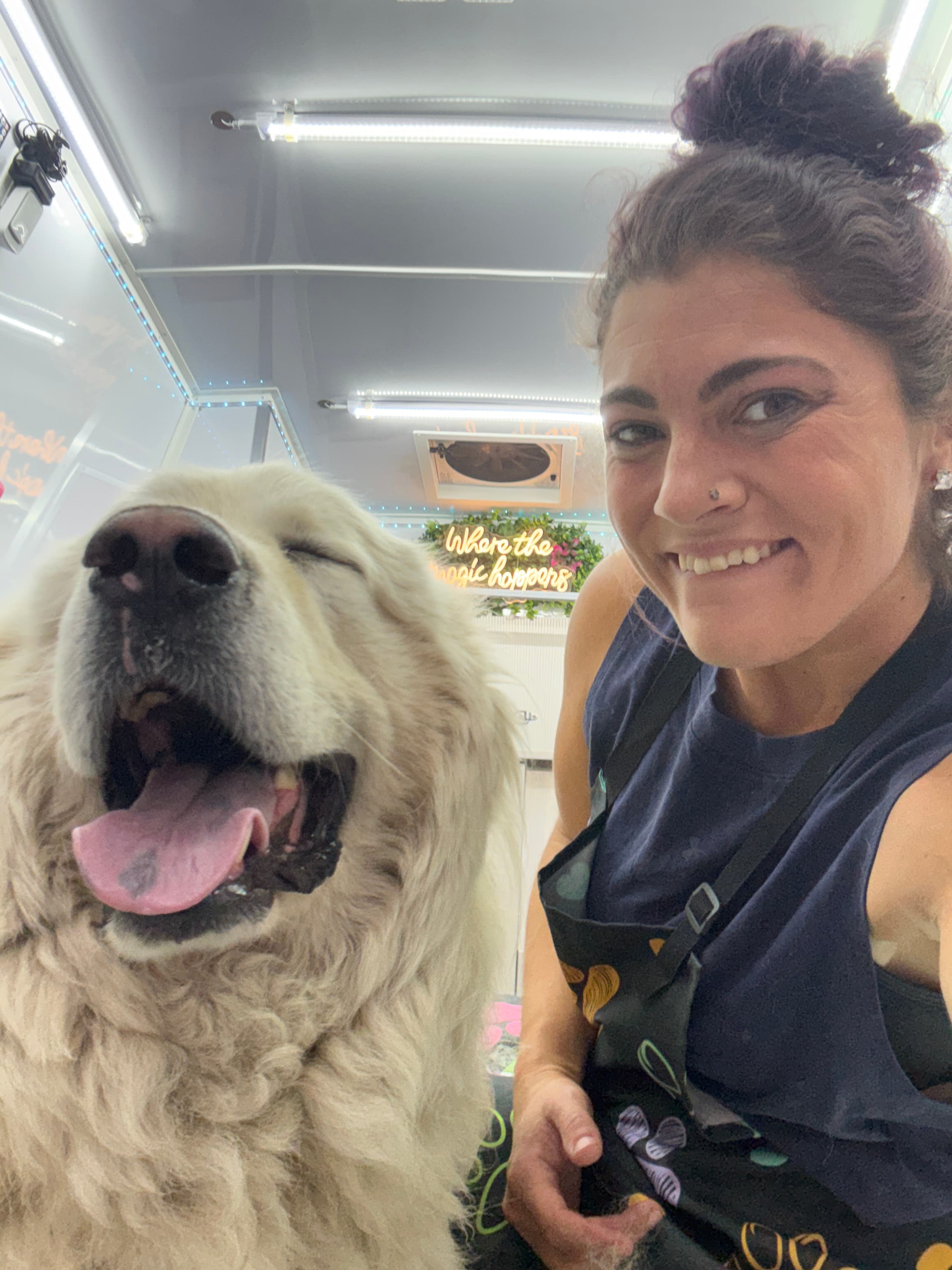
Why does my dog look SO much smaller after a de-shed? Because a shocking percentage of what you were looking at was dead undercoat. The amount that comes off a Husky or Pyrenees in a spring de-shed routinely fills a grocery bag. Everyone takes the photo. You will too.
My groomer offered to shave my Golden without me asking. Is that a red flag? It's at minimum a conversation to have. A skilled groomer should explain the trade-offs above and offer de-shedding as the default. Shaving double coats for convenience — because it's faster than a proper blow-out — is unfortunately a real thing in high-volume grooming.
Sources & further reading
- American Kennel Club — "Is It OK to Shave Your Dog's Coat in Summer?"
- Merck Veterinary Manual — structure of the skin in dogs and post-clipping alopecia references
- AVMA — warm weather pet safety
Educational content from professional grooming experience — not veterinary advice. Medical clipping decisions belong to you and your veterinarian.