The short answer: An occasional paw lick is normal grooming. Repeated licking, chewing, or biting usually means something is itchy, irritated, painful, or uncomfortable. Allergies are a common cause, but injuries, infections, parasites, damaged nails, and even pain elsewhere in the leg can produce the same behavior. The condition of the paw, the number of paws involved, and when the licking happens can help your veterinarian find the cause.
Paw licking can be easy to dismiss, especially when the skin looks normal at first. But dogs can reach the skin between their toes long before redness, hair loss, or sores become obvious.
The licking itself also creates a problem. Saliva keeps the paw damp, while repeated chewing damages the skin barrier. That can give bacteria or yeast an opportunity to grow, causing even more itching and licking.
Here’s what to look for, what you can safely do at home, and when your dog needs a veterinarian.
Start by checking the whole paw
Before reaching for a shampoo, spray, or home remedy, check the entire paw in good light.
Look at:
- The top of the paw
- The pads and the skin between them
- The spaces between each toe
- Every nail, including the dewclaw
- The fur around the toes
- The lower leg and wrist
Watch for redness, swelling, damp fur, brown staining, odor, discharge, cracked pads, a damaged nail, a bump, or something caught between the toes.
Also notice the pattern. A dog suddenly licking one paw may have an injury, broken nail, splinter, sting, or painful spot. Licking several paws over time may point more toward allergies or another widespread skin problem. These patterns are useful clues, but they aren’t a diagnosis.
Common reasons dogs lick their paws
Environmental allergies
Environmental allergies are one of the most common reasons dogs lick their paws. Dogs with atopic dermatitis may react to pollen, mold, dust mites, and other substances in their surroundings.
Unlike people, dogs with environmental allergies often show symptoms through their skin. Paw licking and chewing, face rubbing, ear problems, and itching around the belly or armpits are common patterns.
Kansas City dogs encounter changing outdoor conditions throughout the year, including pollen, damp grass, mud, and winter deicing products. If the licking follows a seasonal pattern or gets worse after time outside, write that down for your veterinarian.
A simple rinse with plain, lukewarm water after outdoor time may remove some material from the coat and paws. Dry thoroughly between the toes afterward. This can reduce exposure, but it won’t diagnose or treat an allergy.
Contact irritation
Sometimes the problem is something the paw touched.
Grass treatments, household cleaners, fragranced products, road salt, ice melt, and residue on sidewalks can irritate sensitive skin. Contact irritation often affects the bottoms of the paws, though more than one area can become involved.
If licking begins shortly after a walk or time in the yard, rinse the paws with plain water and dry them carefully. Avoid applying human lotion, essential oils, peroxide, or a medicated product chosen without veterinary guidance.
Call your veterinarian if the paws remain red, swollen, painful, or itchy after rinsing.
Injuries and something stuck in the paw
A small injury can cause a surprising amount of licking.
Check for:
- Small cuts or punctures
- Thorns, burrs, or debris
- Torn or peeling paw pads
- Blisters or burns
- Swelling between the toes
- A painful spot that makes your dog pull away
Hot pavement and chemical exposure can damage paw pads. Cuts and punctures may also hide between the toes where they’re difficult to see.
Don’t dig into the paw or force out an object that appears deeply embedded. If your dog is limping, bleeding, guarding the paw, or reacting strongly to touch, contact your veterinarian.
Nail and dewclaw problems
A cracked nail, damaged dewclaw, overgrown nail, or inflamed nail bed may cause licking before you notice anything unusual.
Look at each nail from the base to the tip. Compare the sore paw with the others. Blood, swelling around the nail, a nail sitting at an unusual angle, or a strong reaction to touch calls for veterinary care.
Nail injuries can be painful, and a frightened dog may bite when the paw is handled. If your dog is resisting, stop the inspection rather than forcing it.
Infections and paw inflammation
Redness, odor, greasy skin, discharge, swelling, and constant licking may indicate an infection or another form of paw inflammation. Veterinarians use the term pododermatitis for inflammation affecting the feet.
Infections may develop after allergies or repeated licking damage the skin. They can also have other underlying causes, which is why treating the surface alone often doesn’t solve the problem.
Reddish-brown fur between the toes can come from saliva staining. It may also appear with yeast overgrowth, so the color alone can’t tell you what’s happening.
This is veterinary territory. A groomer can observe and document the condition, but diagnosing bacteria, yeast, or another medical cause requires a veterinarian.
Parasites
Fleas, ticks, and mites can make a dog itchy enough to lick or chew their paws. Fleas may be difficult to find, especially when a dog has a thick coat or reacts intensely to a small number of bites.
Check the rest of the body for scratching, scabs, thinning hair, or irritation. Stay current with the flea and tick prevention recommended by your veterinarian.
If the itching appeared suddenly, affects several areas, or continues despite routine prevention, schedule a veterinary exam.
Pain, stress, and repetitive licking
Dogs sometimes lick a leg or paw because something hurts, even when the skin itself looks normal. Joint pain, soft-tissue injuries, and discomfort higher in the leg can all draw attention to the area.
Stress and repetitive behavior can also contribute, but behavior shouldn’t be assumed until medical causes have been considered. Continued licking can eventually create thickened, damaged skin and a persistent sore known as a lick granuloma.
If the paw looks normal but your dog keeps returning to the exact same spot, your veterinarian should evaluate both the skin and the limb.
What you can safely do at home
A few simple steps can give you useful information without making the irritation worse.
Rinse and dry carefully
Use plain, lukewarm water to remove grass residue, mud, road salt, and other material. Dry the paws carefully, especially between the toes.
Track the pattern
Write down:
- Which paws are involved
- What time of day the licking happens
- Whether it follows walks, meals, baths, or yard time
- Whether the ears, belly, or other areas are also itchy
- Any recent changes in food, cleaning products, or outdoor routines
Take clear photos every few days under similar lighting. Photos can help your veterinarian see changes that are difficult to remember from one day to the next.
Prevent further skin damage
If your dog is creating a raw spot, contact your veterinarian. They may recommend a recovery collar or another temporary barrier while the cause is evaluated.
Avoid tightly wrapping the paw at home. A bandage that stays damp, slips, or restricts circulation can create another problem.
Skip home remedies and unprescribed products
Avoid applying vinegar, peroxide, essential oils, human creams, or random medicated shampoos. Several different conditions can look similar, and the wrong product may sting, encourage more licking, or make the skin harder to evaluate.
When your dog needs a veterinarian
Contact your veterinarian promptly if you notice:
- Limping or refusal to bear weight
- Bleeding, discharge, or a damaged nail
- A cut, puncture, burn, or exposed tissue
- Swelling, heat, or a lump between the toes
- Strong odor or greasy skin
- Open sores, scabs, or hair loss
- Pain or growling when the paw is touched
- Licking that interrupts sleep, eating, or play
- Symptoms affecting several areas of the body
- A problem that keeps returning
Painful reddish-purple bumps, draining lesions, and swelling between the toes may be signs of interdigital furunculosis, which requires veterinary diagnosis and treatment.
How restorative grooming can help
Once urgent injuries and medical problems have been ruled out or are being treated by your veterinarian, careful grooming can support the paw care plan.
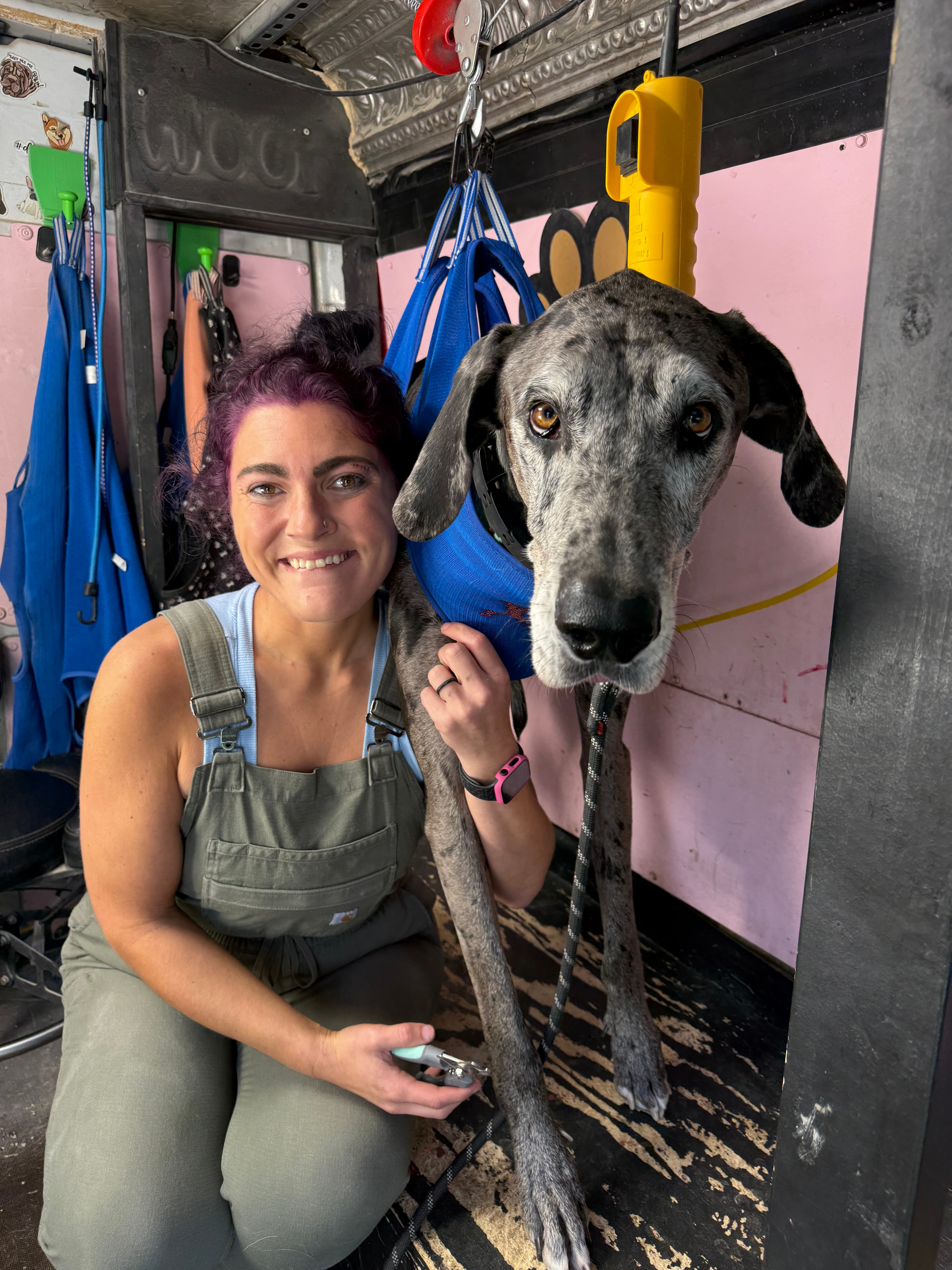
During a restorative skin and coat visit, I can gently clean the paws, remove surface buildup, dry between the toes, support rough or dry pads, and document changes you may want to share with your veterinarian.
Every dog is seen individually in my mobile spa. There are no cages, crowded waiting areas, or rushed handoffs. That quieter setup is especially helpful for dogs who dislike having their feet handled.
Restorative grooming supports clean, comfortable skin and consistent maintenance. It doesn’t replace testing, diagnosis, or medical treatment.
Frequently asked questions
Why does my dog lick their paws at night?
The house may be quieter at night, making an itch or painful spot more noticeable. Some dogs also lick when settling down or feeling stressed. If the behavior is frequent, intense, or focused on one area, check the paw and discuss the pattern with your veterinarian.
Does reddish-brown fur between the toes mean yeast?
Not by itself. Saliva can stain light fur reddish-brown. Yeast may cause similar discoloration along with odor, greasy skin, redness, or inflammation. A veterinarian can examine the paw and determine whether an infection is present.
Can I give my dog allergy medicine for paw licking?
Talk with your veterinarian first. The correct medication and dose depend on your dog’s health, weight, other medications, and the cause of the itching. Paw licking has several possible causes, so allergy medicine may not address the actual problem.
Should I wash my dog’s paws every day?
A plain-water rinse after exposure to mud, grass, pollen, or deicing residue may help. Daily shampooing without a veterinarian-directed plan can irritate the skin. When you rinse the paws, dry them completely between the toes.
Can grooming stop my dog from licking their paws?
Grooming may help when debris, product residue, overgrown coat, or poor drying contributes to irritation. Persistent paw licking often needs veterinary evaluation because allergies, infections, injuries, and pain can look similar from the outside.
Help your dog stay comfortable
Paw licking is information. The sooner you look closely, track the pattern, and address the cause, the better chance you have of preventing a small irritation from becoming a raw, painful problem.
If your veterinarian has ruled out an urgent medical issue and your dog needs gentle paw, skin, and coat maintenance in the Kansas City metro, start your dog’s intake with Healing with Dogs KC.