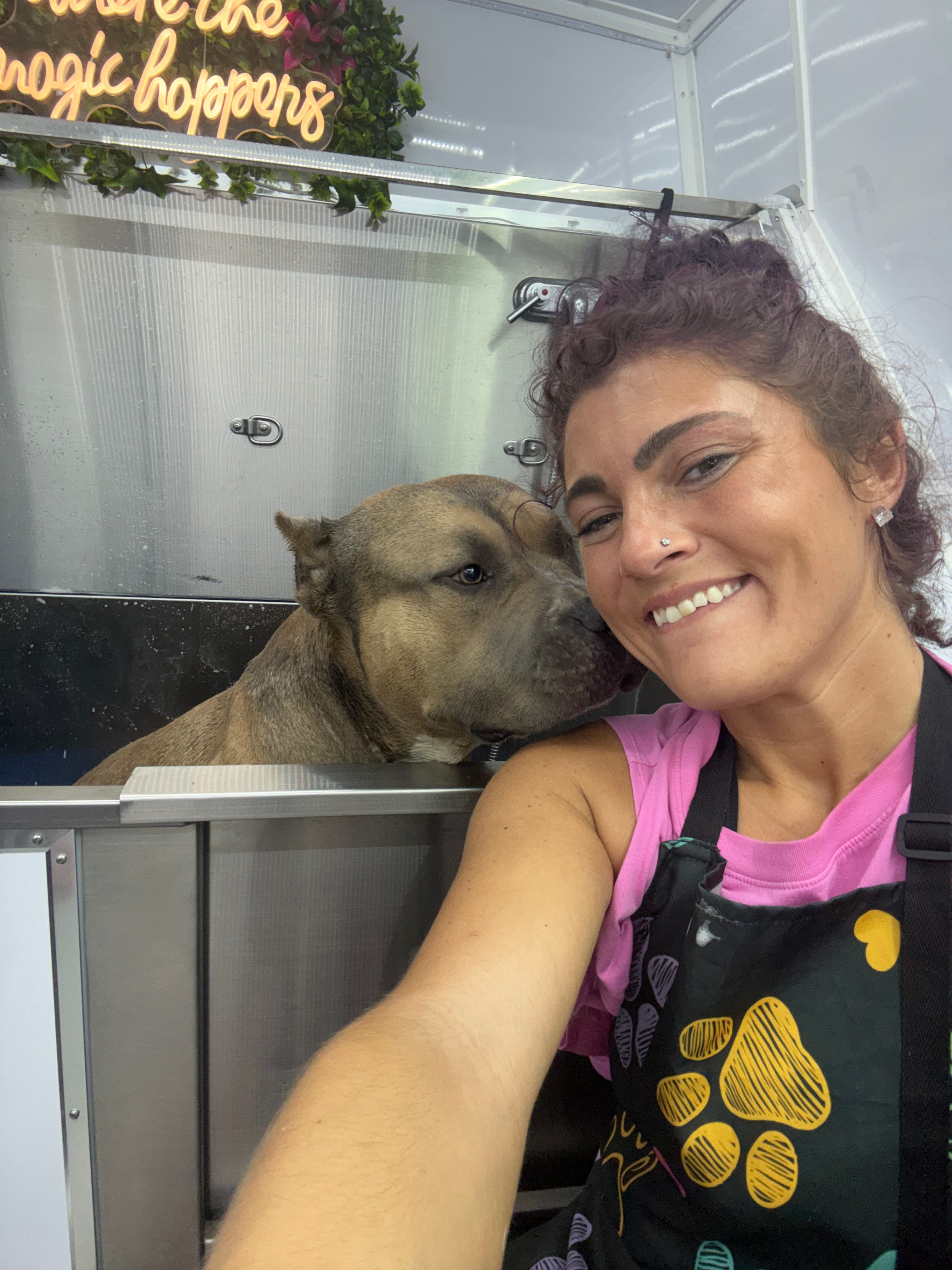
The short answer: For most healthy dogs, every 4–6 weeks, adjusted for coat type and lifestyle. But the more useful truth is this — bath quality matters far more than bath frequency. The right products, correct rinsing, and thorough drying determine whether a bath helps skin or hurts it. "You'll dry out their skin if you bathe too much" is only true when the products and technique are wrong.
"How often should I bathe him?" might be the question I hear most in the mobile spa — and the answers people have collected are all over the map. Once a week. Twice a year. "Never, it ruins their coat." Someone's breeder said monthly, someone's neighbor said dogs clean themselves like cats (they don't).
Here's a coat-by-coat, lifestyle-honest answer — and the reasoning behind it, so you can adjust intelligently instead of following a rule that wasn't written for your dog.
The baseline schedule, by coat type
| Coat type | Examples | Typical interval | Notes |
|---|---|---|---|
| Short, smooth | Boxers, Beagles, Pit-type dogs | Every 6–8 weeks | Weekly brushing does much of the maintenance between baths |
| Short, double | Labs, Corgis, Heelers | Every 4–8 weeks | Complete drying is non-negotiable — damp undercoat invites hot spots |
| Long, double | Huskies, Goldens, Aussies, GSDs | Every 4–8 weeks | Bathe-and-blow-out timing matters most during seasonal coat blows |
| Curly / wool | Poodles, Doodles, Bichons | Every 3–4 weeks | Coat mats when dirty; never bathe a matted coat — water tightens mats |
| Silky / drop | Yorkies, Shih Tzus, Maltese | Every 2–4 weeks | Fine coats collect oil and debris quickly; conditioner is essential |
| Naturally oily | Basset Hounds, Cockers, some spaniels | Every 2–4 weeks | These coats genuinely need more frequent washing to stay comfortable |
| Hairless | Chinese Crested, Xolo | Weekly to biweekly | All skin, no coat buffer — gentle products and sun awareness matter |
Then adjust for life: a creek-swimming farm dog and an apartment couch companion of the same breed do not need the same calendar. Rolling in something dead resets everyone's schedule immediately.
The over-bathing myth, handled honestly
The warning you've heard — "bathing too often strips their natural oils" — is half true. Frequent bathing with a harsh, high-sulfate, heavily fragranced, or human shampoo absolutely strips sebum and dries skin. Do that weekly and you'll manufacture the exact flaky, itchy skin you were trying to wash away. (If that's already happened, start with the complete dry-skin guide.)
But the variable is the product and technique, not the calendar. Veterinary dermatology routinely prescribes bathing multiple times per week for certain skin conditions — with the right formulas. Professional restorative programs (including the ISB protocols I use in my care plans) may bathe a recovering dog more often than any rule of thumb suggests, because every product in the sequence is chosen to support the skin barrier rather than strip it.
So the honest rule is: the gentler and better-matched your products and technique, the more flexible your frequency. The harsher your setup, the more dangerous every bath becomes.
The five mechanics that matter more than frequency
- Dog-formulated shampoo only. Dog skin is near-neutral (roughly pH 6.2–7.4); human skin is acidic (~5.5). Human shampoo — including baby shampoo — disrupts the dog's protective acid mantle. Ask me for my current vetted picks while that recommendation list is offline.
- Lukewarm water. Comfortable on your inner wrist. Hot water strips oils and inflames itchy skin.
- Dilute, then apply. Most quality shampoos are concentrated. Diluting per the label spreads product evenly and rinses cleaner.
- Rinse past the point of boredom. Residue trapped in coat is one of the most common irritants I find on home-bathed dogs. When you think you're done, rinse two more minutes.
- Dry completely. Towel-blot, then air-dry a short coat or cool-dry a dense one. Damp undercoat against skin is the classic setup for hot spots.
Signs your current routine is too harsh: flaking or itching that spikes in the days after a bath · a coat that looks fluffy but feels straw-dry · doggy odor returning within days (stripped skin overproduces oil) · redness on the belly or armpits post-bath. Any of these = change the product before you change the schedule.
When skin problems change the math
Counterintuitively, dogs with skin trouble often need more frequent bathing, not less — but with products matched to their skin, which is exactly where guesswork gets expensive. If your dog has diagnosed skin disease, your veterinarian sets the bathing schedule and products; follow it exactly. If your dog has undiagnosed chronic itch or flaking, know the red flags in the dry-skin guide that mean vet-first.
Frequently asked questions
Do indoor dogs that don't smell still need baths? Yes. Bathing removes dander, pollen, and buildup you can't smell, and it's when lumps, ticks, and skin changes get caught early. Every 6–8 weeks is a fair rhythm for a clean-living dog, with regular brushing in between.
Can I just rinse my dog with water between baths? Absolutely — a plain-water rinse after swimming, mud, or a dusty park is great, and it doesn't count against any schedule. Just dry thoroughly, especially dense coats.
Should I bathe my dog before or after de-shedding? Proper de-shedding is a bath-through-finish process: bathe, condition, then blow out and brush the released undercoat. Brushing a dirty, dry coat scratches the hair shaft and skips most of the loose undercoat. (More in Why You Should Never Shave a Double-Coated Dog.)
My groomer said never bathe a matted dog. Why? Water tightens mats like felting wool, pulling them harder against the skin. Mats need to be safely removed or opened first — sometimes a professional job — before water touches the coat.
What about anxious dogs who hate baths? Frequency takes a back seat to trust-building. Start with Helping an Anxious Dog Learn That Grooming Is Safe — a calm bath every 8 weeks beats a traumatic one every 4.
Sources & further reading
- American Kennel Club — "How Often Should You Bathe Your Dog?"
- Merck Veterinary Manual — routine health care for dogs and treatment of skin disorders in dogs
- Iv San Bernard USA — professional skin and coat education
Educational content from professional grooming experience — not veterinary advice. Dogs with diagnosed skin conditions should follow their veterinarian's bathing plan.