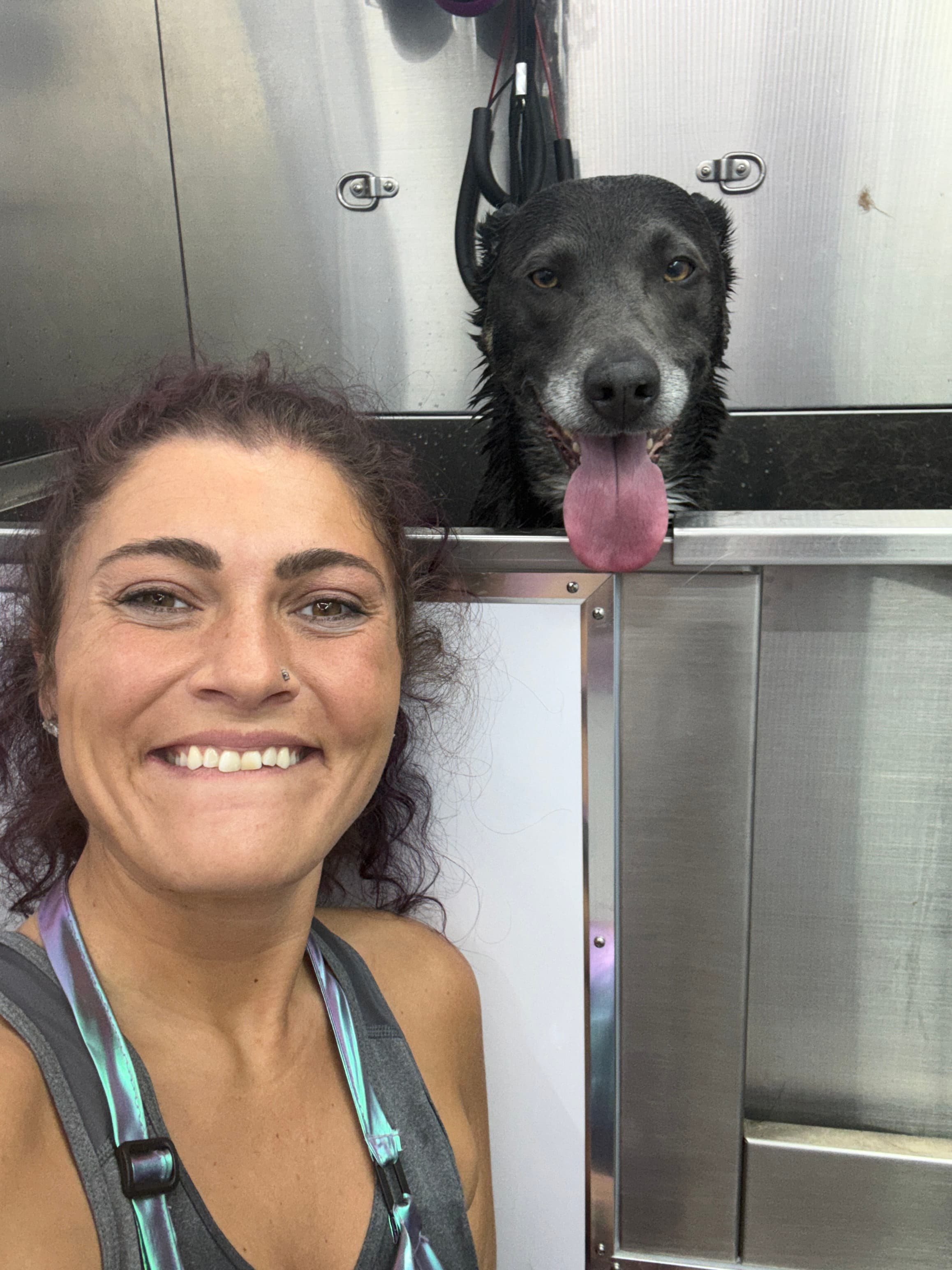
The short answer: A hot spot (acute moist dermatitis) is a raw, rapidly spreading patch of infected skin that a dog creates by licking, chewing, or scratching one spot — often appearing in a matter of hours. Kansas City summers are peak season: heat, humidity, swimming, and flea activity all feed them. Prevention is a grooming problem. An established hot spot is a veterinary problem. This guide covers both sides of that line.
If you've ever left a completely normal dog at bedtime and found an angry, oozing, hairless patch the size of your palm by morning — that's a hot spot, and no, you didn't miss it for weeks. They really are that fast. Hot spots are one of the most common summer emergencies I hear about from Kansas City dog owners, and they're also one of the most preventable.
What a hot spot actually is
The medical name says it all: acute moist dermatitis. Acute — it develops fast. Moist — the surface weeps. Dermatitis — inflamed skin.
The sequence is almost always the same:
- Something itches. A bug bite, flea, allergy flare, damp undercoat, a mat pulling on skin, even boredom-licking.
- The dog attacks the itch. Licking, chewing, and scratching break the skin's surface.
- Normal skin bacteria move in. The broken, warm, moist surface is a perfect incubator, and the infection makes the spot itch more.
- The cycle accelerates. More itch → more chewing → bigger lesion. A dime-sized irritation can be palm-sized within a day.
That self-feeding loop is why hot spots don't "wait until Monday" well, and why the treatment always involves breaking the cycle — which usually requires things only a vet can provide.
Why summer — and why Kansas City summers especially
Hot spots happen year-round, but summer stacks every risk factor at once:
- Humidity. KC summers keep coats from drying fully — after swimming, sprinklers, rain, or even a bath. Trapped moisture against skin under a dense coat is the #1 setup I see.
- Swimming season. Lake and creek dogs who never get properly dried are hot-spot regulars. It's not the water; it's the wet undercoat that stays wet for a day afterward.
- Flea season. A single flea bite on a flea-allergic dog can trigger the itch that starts the whole cascade. If your dog isn't on vet-recommended flea prevention, that's step zero.
- Seasonal allergies. Summer pollens have itchy dogs already primed to chew.
- Undercoat load. Double-coated dogs carrying dead, unbrushed undercoat trap heat and moisture against the skin. (This is also a big reason you shouldn't shave them — the answer is de-shedding, not removal.)
Highest-risk profile: a thick or double-coated dog (Goldens, Labs, GSDs, Newfies, Saint Bernards), in summer, who swims or got wet, has any flea exposure or allergies, and isn't fully dried or regularly brushed. If that's your dog, prevention should be a routine, not a reaction.
Prevention: the part that belongs to you (and me)
Hot spot prevention is genuinely a grooming-and-husbandry job:
- Dry your dog completely, every time. After swims, baths, and rainstorms. Towel-blot, then dry the undercoat — on dense coats that means a dryer on cool/low, not just a towel pass. If you can part the fur and the skin feels damp, you're not done.
- Keep the undercoat moving. Regular brushing removes the dead coat that traps moisture and heat. During seasonal coat blows, a professional bath-and-blowout does in one session what weeks of home brushing can't. (This is core to my maintenance visits.)
- Stay ruthless about flea prevention. Ask your vet which product fits your dog. One bite matters for allergic dogs.
- Address mats immediately. A mat holds moisture and pulls on skin — a pre-made hot spot site. Never bathe a matted dog; deal with the mat first.
- Know your dog's itch baseline. If licking or scratching suddenly focuses on ONE spot, part the fur and look, today. Catching a hot spot at the "pink and damp" stage instead of the "raw and oozing" stage changes everything.
- Manage allergy season with your vet. If every August brings itching, an annual plan beats an annual emergency.
The line: when it's a vet visit (spoiler — almost always)
Here's where I'm going to be more direct than most grooming blogs: an established hot spot is not a DIY project, and it's not a grooming appointment either. Here's why:
- Treatment usually requires clipping the fur over and around a painful, raw lesion so it can dry and be treated. Hot spots hurt — even sweet dogs may snap. Vet teams can do this safely (and with sedation if needed).
- Most hot spots need prescription treatment — typically topical or oral medication for infection and inflammation. Over-the-counter creams under a licked-off layer of fur don't cut it, and some human products are unsafe for dogs to ingest.
- The trigger needs a diagnosis. Fleas? Allergy? Ear infection driving scratching? Recurring hot spots in the same area are a message, and figuring out the sender is vet work.
Call your vet promptly if you see: a rapidly growing raw patch · oozing, crusting, or odor · your dog guarding the area or reacting to touch · multiple spots · lethargy or fever alongside the lesion · or any hot spot in a young puppy or senior.
What I do as a groomer is everything around the edges: prevention, early detection during visits (I check skin every single time and photograph anything suspicious for you), keeping coats dried and de-shedded, and post-recovery coat care once your vet clears the skin. What I don't do is treat them — and any groomer who offers to should worry you.
The gray zone, honestly handled: If you catch the earliest possible stage — a small pink damp area, skin not broken, dog only mildly interested in it — keeping it clean, DRY, and interrupting licking while you call your vet for guidance is reasonable. But "I'll watch it a few days" is how palm-sized lesions happen. When in doubt, call. Vets would rather hear about a small one.
Frequently asked questions
Can I put Neosporin or hydrocortisone on a hot spot? Ask your vet before applying anything. Dogs lick topical products off (ingesting them), licking keeps the wound wet, and the fur cover defeats the treatment anyway. The clip-clean-treat sequence your vet does exists for a reason.
Why does my dog get a hot spot in the same place every summer? Recurring location is a clue: under the ear often points to ear infections, the tail base to fleas, the hips/rear to allergies or joint pain licking. Bring the pattern to your vet — same-spot recurrence is diagnostic gold.
Are hot spots contagious to other dogs or people? The hot spot itself isn't contagious — it's the dog's own skin bacteria in a self-inflicted wound. But whatever triggered it (like fleas) can absolutely affect your other pets.
Will the fur grow back? Usually yes, fully, once the skin heals — though it can take several weeks and may grow in a slightly different texture at first. Good coat nutrition and gentle restorative care support the regrowth.
How fast do hot spots really appear? Hours. A dog can start a hot spot at breakfast and have a serious lesion by dinner. That speed is exactly why "keep an eye on it" is the wrong plan.
Sources & further reading
- Merck Veterinary Manual — "Pyoderma in Dogs and Cats" (includes acute moist dermatitis/hot spots)
- American Kennel Club — "Hot Spot Treatments and Prevention on Dogs"
- AVMA — warm weather pet safety
Educational content from professional grooming experience — not veterinary advice. Hot spots are painful, fast-moving, and usually infected: when you find one, your veterinarian is the right call, not your groomer and not the internet.